The Art of Drawing Types of Drawings and Their History
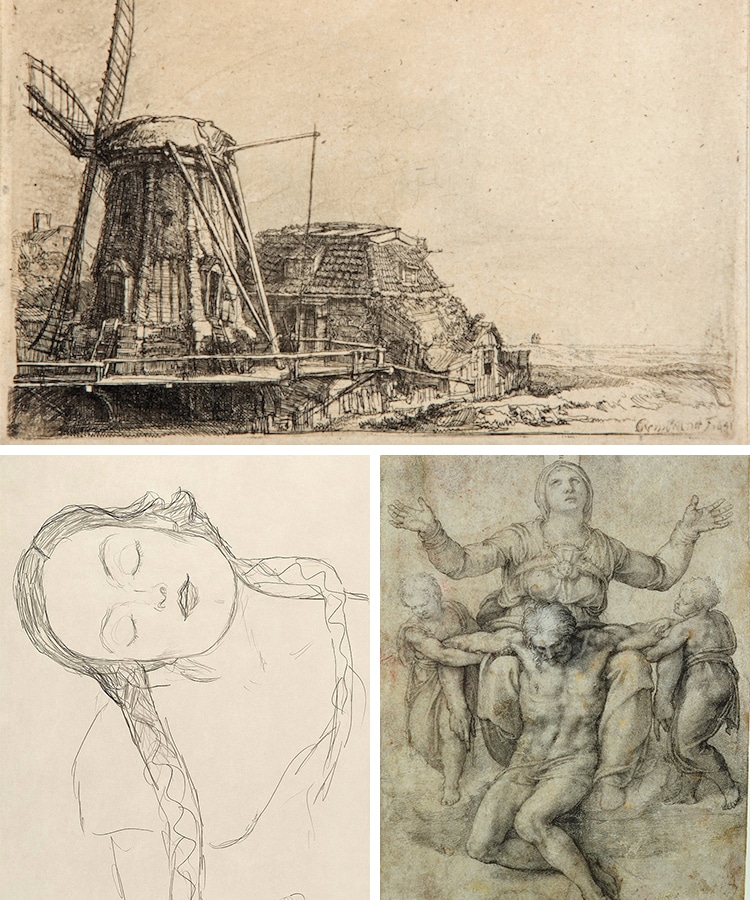
Drawing is one of the oldest forms of visual art with a long and diverse history. It is widely considered the foundation of all art and the first medium students must master. And while its widespread accessibility means it continues to exist a pop pursuit for creatives around the world, drawings are oft overshadowed by painting and sculpture.
However, many artists who are famous for their piece of work in colour were also exemplary draftspeople. In fact, masters similar Leonardo da Vinci, Michelangelo, and Rubens made countless preparatory drawings before each painting to study their subjects and develop compositions. Similarly, Jean-Auguste-Dominique Ingres created refined graphite portraits which are some of his most celebrated piece of work today.
Hither, we will explore ten famous artists who utilized the ability of lines in their artwork.
Who are the most famous drawing artists? Acquire about some of the greatest masters of the line.
Leonardo da Vinci (1452 – 1519)
Leonardo da Vinci is the quintessential Renaissance man whose unending curiosity inspired him to study art, technology, and nature. And all of his interests tin exist plant in his legacy of notebooks.
In these notebooks are hundreds of detailed sketches exploring man anatomy, animals, plant life, inventions, and more. They show how Da Vinci used drawings to recollect critically every bit well every bit solve problems.
Albrecht Dürer (1471-1528)
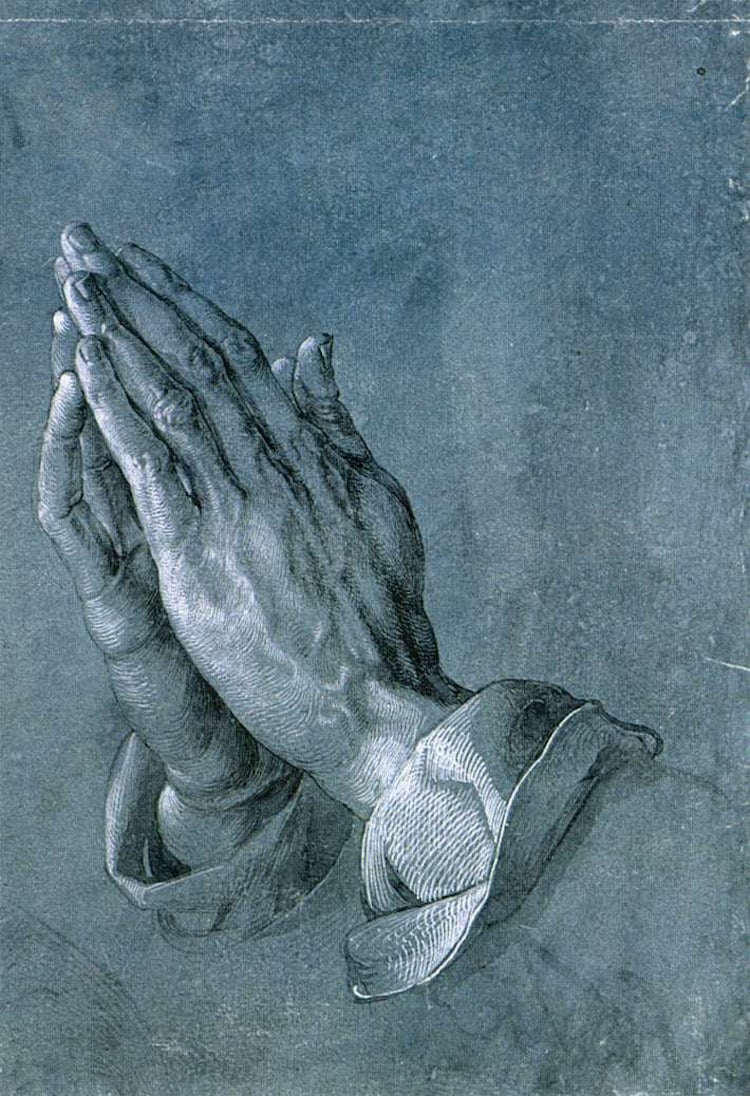
"Praying easily," pen and ink drawing, 1508 (Photograph via Wikimedia Commons, Public Domain Dedication)
Northern Renaissance creative person Albrecht Durer was the first artist to elevate printmaking to a form of fine fine art. He produced engravings, woodcuts, and etchings based on his meticulously detailed drawings. Information technology was the first time someone attempted to duplicate such realistic illustrations, and its overwhelming success subsequently inspired other artists to make and distribute prints.
Michelangelo Buonarroti (1475 – 1564)
For many, Michelangelo is still the greatest creative person of all time. His mastery over different disciplines—painting, sculpture, architecture—is unparalleled. At the cadre of his creative do, however, was cartoon.
Earlier each painting and sculpture, the Italian creative person created numerous sketches of the human figure. These expressive drawings reveal a deep understanding of beefcake and physiology and provide insight into how Michelangelo approached his elaborate compositions.
Rembrandt (1606 – 1669)
Celebrated for his successes spanning multiple media and types of discipline matter, Rembrandt was called a "colossus of art" past prolific sculptor Auguste Rodin. In his drawing, he was known for his ability to render both landscapes and subjects quickly and confidently.
British artist David Hockney praised Rembrandt's gestural drawing A child being taught to walk, proverb: "I think it's the greatest drawing e'er washed… Information technology's magnificent cartoon, magnificent."
Peter Paul Rubens (1577 – 1640)
Known for his voluptuous women, opulent colors, and dynamic compositions, Peter Paul Rubens is considered to be one of the most influential painters of the Bizarre period. Before he embarked on a commissioned painting, he created several preliminary studies of his subjects.
These surviving sketches display the Flemish artist's confident drafting ability. With but a few confident lines, he could convey gestures and emotion.
Jean-Auguste-Dominique Ingres (1780 – 1867)
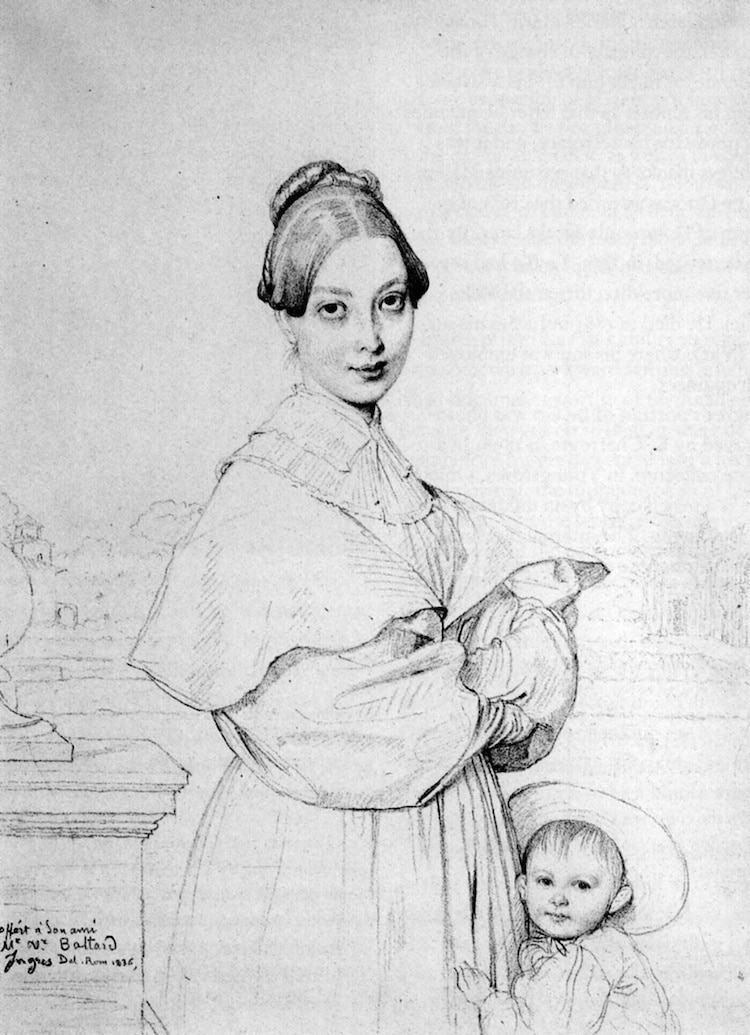
Jean-Auguste-Dominique Ingres, "Portrait of Victor Baltard's Wife (born Adeline Lequeu) and their Girl Paule," c. 1800s (Photo: Public Domain via Wikimedia Commons)
Neoclassical artist Jean-Auguste-Dominique Ingres was known for his larger-than-life paintings which historic traditional painting techniques. And while his work in oil was sometimes scrutinized by gimmicky critics for its gothic undertones, his numerous drawings and graphite portraits were highly revered for their precision at capturing a subject's concrete appearance and personality.
Edgar Degas (1834 – 1917)
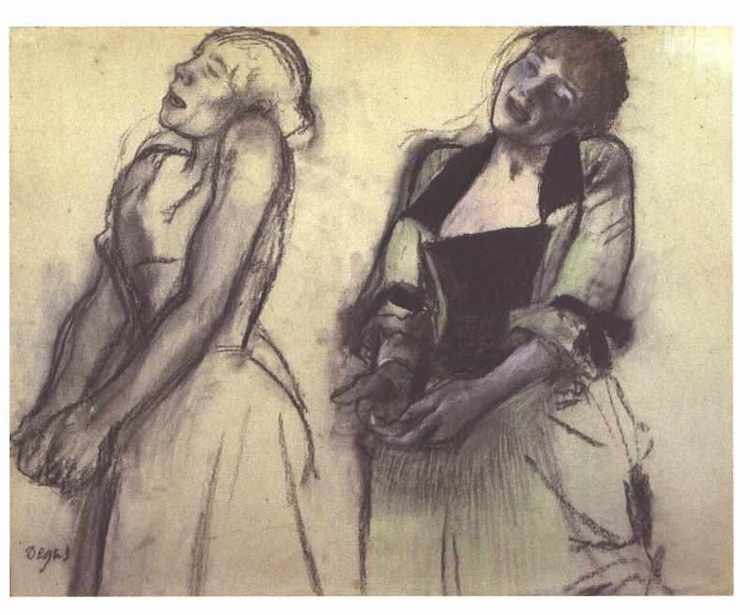
Edgar Degas, "Ii Studies of a Singer," c. 1870-1900s (Photo: Public Domain via Wikimedia Commons)
While most Impressionists institute inspiration in picturesque landscapes, French artist Edgar Degas preferred capturing human subjects, especially those in movement. In addition to his many well-known paintings, he too made endless pastel and pencil studies of ballerinas, singers, and bathing women—each of which displays his finesse at rendering the homo class in action.
Gustav Klimt (1862 – 1918)
Near associate Gustav Klimt's glittering paintings with their aureate touches. But the Austrian artist was also a master draftsman who utilized strong lines in his compositions. His striking renderings of the female person figure utilize foreshortening and perspective.

Gustav Klimt, "Two Studies of a Seated Nude with Long Hair," 1901-1902 (Photo: Public Domain via Wikimedia Commons)
Henri de Toulouse-Lautrec (1864 – 1901)

Henri de Toulouse-Lautrec, "The Jockey," 1899 (Photo: Public Domain via Wikimedia Commons)
A contemporary of Vincent van Gogh and Paul Gauguin, French creative person Henri de Toulouse-Lautrec spent most of his life in the theatrical underbelly of Paris.
In his posters, Toulouse-Lautrec employs masterful employ of the line to characterize well-known performers of the time, including Yvette Guilbert, Louise Weber, and Jane Avril. His draftsmanship captured the motility of dance and the free energy of Parisian nightlife during the Belle Époque.
Pablo Picasso (1881 – 1973)
With a career that spanned 79 years, Pablo Picasso is known for irresolute his painting style several times. Throughout his many artistic shifts, all the same, the artist retained a uniquely decisive style of capturing the world around him in drawings. In detail, these sketches show how the Spanish artist needed only a few assuming lines to evoke the form of his subjects.
Related Articles:
Amazing Collection of Michelangelo Drawings Is Now in the U.S. For the First Fourth dimension
This Creative person Creates Larger-Than-Life Flower Drawings With Colored Pencils
The Significance of Leonardo da Vinci'south Famous "Vitruvian Human" Drawing
Talented Artists Share Their Favorite Tips for Improving Your Drawing Skills
palfreymanfacoure1979.blogspot.com
Source: https://mymodernmet.com/best-drawings/
0 Response to "The Art of Drawing Types of Drawings and Their History"
Post a Comment